

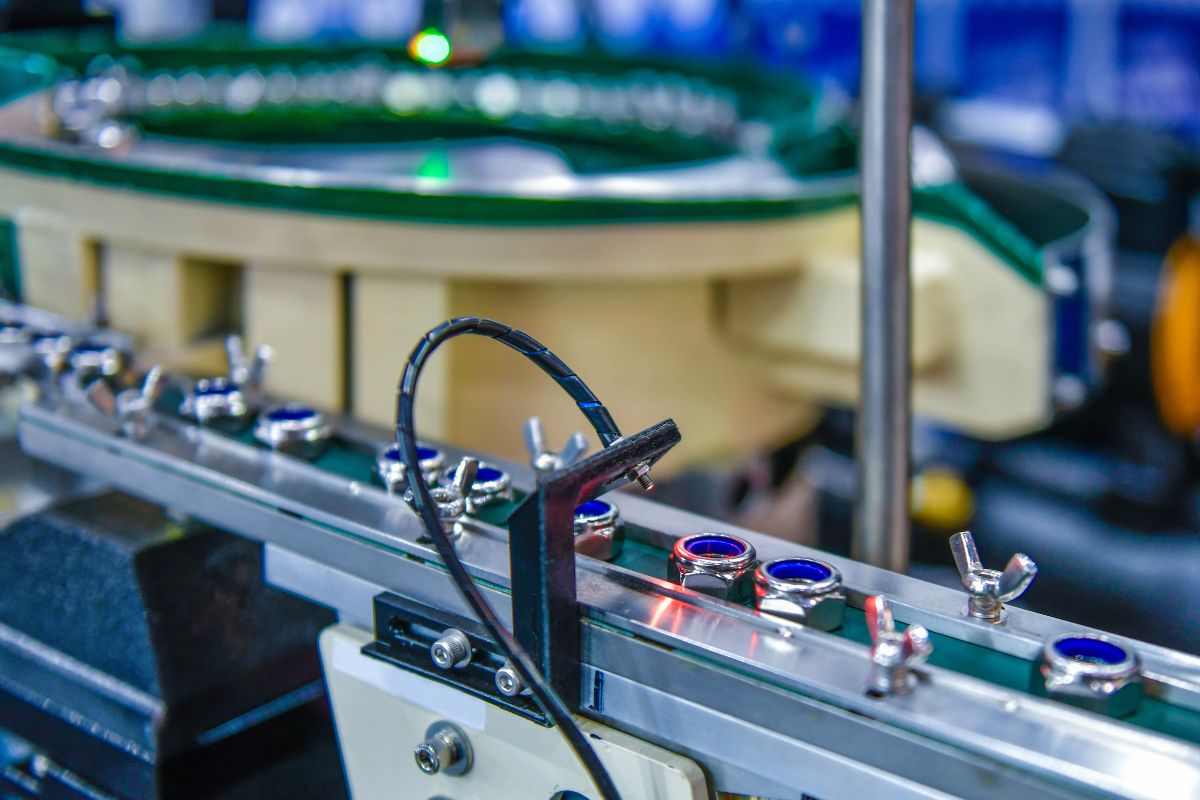
Artificial intelligence is changing the way businesses work, and manufacturing is one of the industries where the impact can be seen most clearly. From automated production lines to smarter robots, technology is helping manufacturers improve efficiency, reduce waste, and produce better-quality products.
One of the most interesting developments is the use of Industrial Vision Systems. These systems combine cameras, specialist software, machine learning, and artificial intelligence to give manufacturing equipment the ability to see products, identify problems, and make decisions in real time.
For manufacturers, this can mean faster production, more reliable quality control, and fewer defective products making their way to customers.
What Are Industrial Vision Systems?
Industrial vision systems are essentially automated eyes for a manufacturing process. Cameras capture images of products, components or assemblies as they move through a production line. Software then analyses those images to check whether everything meets the required standards.
Traditional machine vision has been used in manufacturing for many years. It can perform tasks such as checking measurements, reading barcodes, confirming that components are present and identifying obvious defects.
AI takes this a step further. Rather than relying entirely on a long list of fixed rules, AI-powered vision systems can be trained using examples of good and defective products. The system learns what normal production should look like and can then identify variations that may indicate a problem.
This is particularly useful when defects are difficult to define with simple rules. Industrial Vision Systems explains that its AI and deep learning technology can be used for applications including surface inspection, object recognition, component detection and part identification.
Why Is AI Useful In Manufacturing?
Manufacturing environments can be incredibly fast-paced. A production line may create hundreds or even thousands of products during a shift, making manual inspection of every item difficult.
Human inspection still has an important role, but people can become tired, distracted or inconsistent when carrying out repetitive tasks for hours at a time. An automated vision system can perform the same inspection repeatedly, at high speed, without needing a break.
AI-powered vision can also identify subtle differences that might be difficult for a person to spot. For example, a system could be trained to recognise a particular surface defect. If the defect changes slightly in shape, size or appearance, a traditional rule-based system may struggle. An AI system trained on a range of examples can potentially recognise the wider pattern rather than looking for one exact version of the defect. This makes AI particularly useful in modern manufacturing, where products and processes can vary.
Quality Control At Production-Line Speed
One of the biggest advantages of industrial vision is the ability to carry out quality checks while production is still taking place.
Instead of waiting until a batch has been completed before checking samples, manufacturers can build inspection directly into the production process. Products can be examined as they move along the line, with defective items identified and rejected automatically. This can help manufacturers spot problems much earlier.
Imagine a production machine gradually developing a fault. Without automated inspection, hundreds of defective products could potentially be produced before somebody notices the issue. With an intelligent vision system monitoring the process, changes in defect rates or product appearance can be detected much sooner.
Industrial vision systems provide real-time, traceable production information, allowing manufacturers to monitor defect rates and identify quality issues as they develop. That information isn’t just useful for rejecting faulty products. It can help engineers understand what is happening on the production line and take corrective action.
Reducing Waste And Improving Efficiency
Better quality control can have a knock-on effect throughout a manufacturing business. When defective products are detected quickly, manufacturers can potentially reduce wasted materials, avoid unnecessary rework, and prevent large batches from being affected by the same problem.
There can also be savings in time. Automated inspection can carry out repetitive checks at production speed, freeing employees to concentrate on tasks that require human judgement, problem-solving and technical expertise. Industrial vision systems also highlight benefits including increased productivity, lower waste and downtime, improved product quality, and better traceability.
For businesses under pressure to improve efficiency while keeping costs under control, these benefits can make machine vision an increasingly attractive investment.
AI Can Handle More Than Just Defect Detection
When people hear about machine vision, they may imagine a camera looking for a scratch or missing component. While defect detection is an important application, modern systems can do much more.
Vision technology can be used to:
- Check whether components are present
- Measure parts and components
- Confirm correct positioning
- Read codes and markings
- Verify labels and print quality
- Identify products
- Check colour and appearance
- Detect contamination or debris
- Guide robots
- Check assemblies
- Monitor surface quality
- Identify products that fall outside specified tolerances
Industrial vision systems offer both 2D and 3D vision technology and describe applications ranging from measurement and code reading to robot guidance and assembly inspection. This means vision systems can become an important part of a wider automated manufacturing environment rather than simply being a final quality check.
The Role Of AI In Smart Factories
The rise of AI-powered vision systems fits into the wider move towards smart manufacturing. Modern factories increasingly rely on connected equipment that can collect, share and analyse information. A vision system can contribute valuable data to this environment, providing information about product quality and production performance. For example, manufacturers can record inspection images and results, monitor trends and identify changes in production quality. This creates a much clearer picture of what is happening on the factory floor.
The result is a shift from simply finding defective products to understanding why problems are happening. That distinction is important. Finding a faulty product after it has been produced is useful. Detecting a developing problem early enough to prevent hundreds more faulty products from being made is considerably more valuable.
AI And Human Workers Can Work Together
There is sometimes a concern that automation and artificial intelligence will simply replace people in manufacturing. In reality, many vision applications are designed to support workers rather than remove the need for human expertise.
Machines are particularly good at repetitive, high-speed and highly consistent tasks. People are better at dealing with unusual situations, making complex decisions and solving problems. Combining the two can therefore create a stronger production process.
An automated vision system might identify an unusual defect and remove the affected product from the production line. An engineer can then investigate why the defect occurred and decide what needs to change. This creates a useful partnership between technology and human expertise.
Is AI Vision The Future Of Manufacturing?
AI-powered industrial vision is already being used across a wide range of manufacturing applications, including automotive, pharmaceutical, medical, food, packaging and electronics production.
As AI technology continues to develop, its role in manufacturing is likely to become even more significant. The biggest opportunity isn’t simply teaching a machine to recognise a faulty product. It connects visual inspection to the wider manufacturing process, enabling businesses to understand quality, identify trends, improve processes, and make better decisions using real production data.
For manufacturers, that could mean fewer defects, less waste, more efficient production and greater confidence that products leaving the factory meet the required standards.
Industrial vision may once have sounded like something from a futuristic factory, but AI-powered inspection is already helping turn that idea into reality. As manufacturers look for smarter ways to improve quality and productivity, giving machines the ability to see, analyse and respond is likely to become an increasingly important part of the modern production line.
In Conclusion
AI is not simply changing the products we use; it is changing the way those products are made.
Industrial vision systems provide manufacturers with a powerful combination of visual inspection, automation and intelligent data analysis. By detecting problems quickly and consistently, these systems can help businesses improve quality while reducing waste and making production more efficient.
*This is a collaborative post