

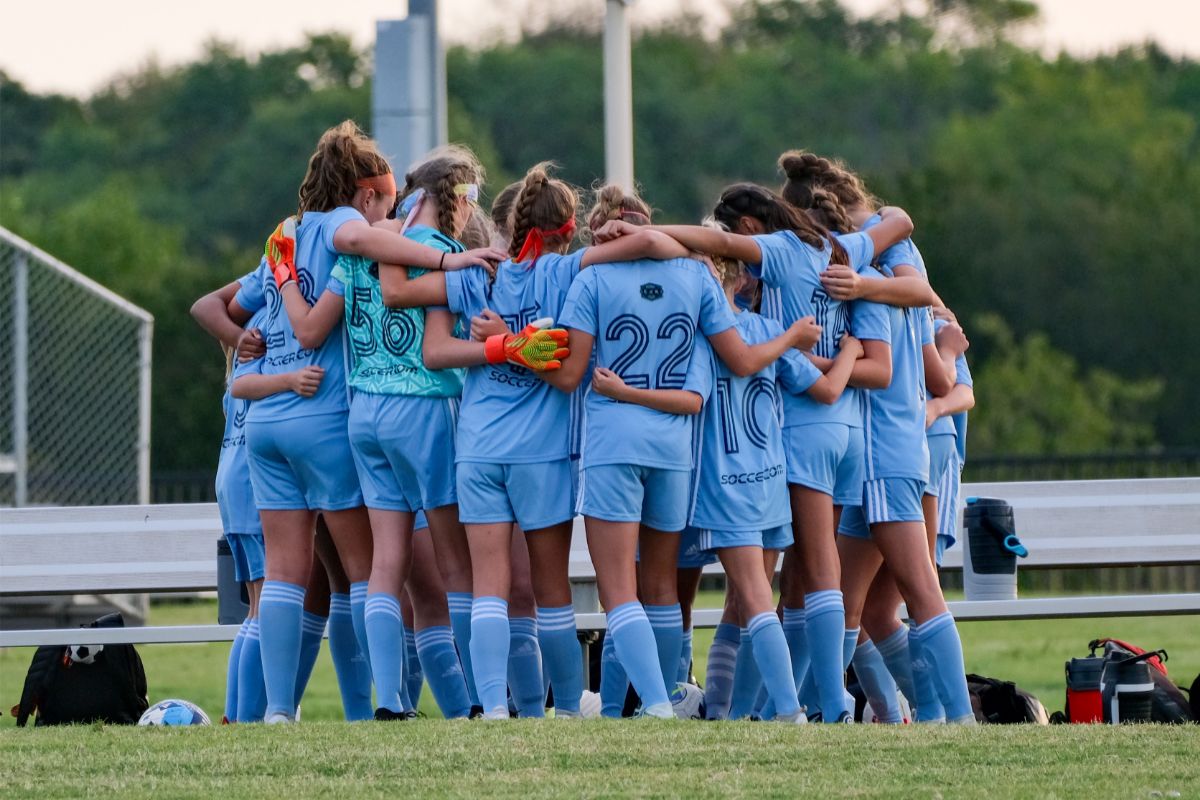
Watch a child at the edge of a pitch, waiting to be passed the ball, and you are watching something bigger than sport. You are watching patience take shape. You are watching a young person learn that they are one part of something, that the game does not revolve around them, and that this is not a disappointment but a relief.
Parents tend to sign children up for team sports for the obvious reasons: fresh air, fitness, and a way to burn off a Saturday morning. Those reasons are good ones. But the lessons that last, the ones a child carries into adulthood without ever naming them, are usually the quiet ones. They arrive slowly, between the whistles, and they rarely announce themselves.
Losing well is a skill worth having
The first of these lessons is how to lose. It is an uncomfortable thing to teach directly and almost impossible to teach from a chair. On a team, a child loses in company. They see that a defeat is shared, that it is survivable, and that the sun comes up the following week with another match to play.
That repetition matters. A child who loses forty times learns something a child who is protected from losing never does: that effort and outcome are not the same thing, and that showing up again is the point. It is a lesson with a long reach. The adult who can take a knock at work, dust themselves down and try a different approach often first practised that on a muddy field at the age of nine.
Belonging, before the individual
There is a moment in most team sports when a child stops thinking about their own performance and starts thinking about the group. It is subtle. They begin to pass when passing is the better choice, to cover for a teammate who is out of position, to celebrate a goal they did not score. This shift from *me* to *us* is one of the most valuable things a young person can develop, and it is difficult to manufacture in a classroom alone.
Schools that understand this tend to build sport into the wider life of the child rather than treating it as an afterthought. The strongest environments for young people are often found in places that see character and confidence as part of a full education, where the pitch and the classroom are two sides of the same effort. Blackrock College has long treated sport this way, as a means of forming people rather than simply producing results.
Small courage, repeated often
Then there is courage, though it rarely looks dramatic. It is the child who volunteers to take the penalty, knowing they might miss in front of everyone. It is the quiet player who finally speaks up in the huddle. Team sport offers a steady supply of small, manageable risks, and each one taken makes the next feel a little easier.
Communication grows the same way. A team cannot function in silence, so children learn to call for the ball, to warn a teammate, and to say sorry and mean it. These are ordinary skills, but they are the foundations of getting on with other people, and they are learned far more naturally in motion than in theory.
None of this happens because anyone sat the child down and explained it. It happens because they turned up, week after week, and played. The lessons soaked in through the boots.
So if your child is dithering at the edge of joining a team, it may be worth a gentle nudge. Not for the trophies, which come and go, but for the person they are quietly becoming while they chase a ball around in the rain. You can read more about how sport and character education work together at https://blackrockcollege.com.
—
*This article was contributed by the team at Blackrock College, a well-established school with a long tradition of combining strong academic standards with sport, music and community life. Blackrock College is committed to educating the whole person and helping young people grow in confidence, character and belonging.*